Lean and Continuous Improvement for the ASQ CQE
Continuous improvement is a full section of the CQE Body of Knowledge. Here are the lean and improvement concepts every candidate should master.
Quality engineering is not only about controlling processes as they are—it is about making them steadily better. Continuous improvement is a dedicated section of the CQE Body of Knowledge, and it draws on lean thinking, kaizen, and the structured improvement cycles that turn good processes into great ones.
I am John Lee of Alpha Training and Consulting. This guide covers the lean and continuous improvement concepts the CQE expects you to know and apply.
Lean: eliminating waste
Lean thinking, rooted in the Toyota Production System, defines value from the customer’s perspective and works to eliminate everything that does not add value. Anything the customer would not willingly pay for is waste, and lean gives us a vocabulary for spotting it.
| Waste | Example |
|---|---|
| Defects | Scrap and rework |
| Overproduction | Making more than is needed |
| Waiting | Idle time between steps |
| Non-utilized talent | Underusing people’s skills and ideas |
| Transportation | Unnecessary movement of materials |
| Inventory | Excess work-in-process and stock |
| Motion | Unnecessary movement of people |
| Excess processing | Doing more than the customer requires |
Core lean tools
- Value stream mapping: visualizing the flow of material and information to expose waste.
- 5S: sort, set in order, shine, standardize, sustain—a foundation for workplace organization.
- Kanban: a pull system that limits work-in-process and signals when to replenish.
- Poka-yoke: mistake-proofing that makes errors impossible or immediately obvious.
PDCA and kaizen
The engine of continuous improvement is the PDCA cycle: Plan a change, Do it on a small scale, Check the results against expectations, and Act to standardize what worked or adjust what did not. Kaizen applies this cycle relentlessly and inclusively, making small improvements a daily habit for everyone rather than an occasional event.
How it all connects
Continuous improvement is where the rest of your quality toolkit comes to life. Root cause analysis finds what to fix, design of experiments finds the best settings, and lean removes the waste around them. Master these together and you move from controlling quality to continuously improving it—exactly the mindset the CQE is designed to certify.
Frequently asked questions
What is the difference between lean and Six Sigma?+
Lean focuses on eliminating waste and improving flow; Six Sigma focuses on reducing variation and defects through statistical methods. Many organizations combine them as Lean Six Sigma because the two are complementary.
What are the eight wastes of lean?+
Commonly remembered by DOWNTIME: Defects, Overproduction, Waiting, Non-utilized talent, Transportation, Inventory, Motion, and Excess processing.
What is kaizen?+
Kaizen is the philosophy and practice of continuous, incremental improvement involving everyone. Rather than relying only on large projects, it makes small, ongoing improvements a routine part of daily work.
Written by
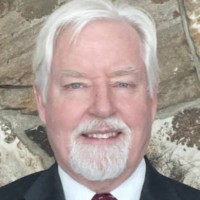
John Lee
President, Alpha Training and Consulting
John Lee has more than 25 years of experience in quality engineering and has personally earned every ASQ certification, including the Certified Quality Engineer (CQE). A Shingo Award–winning author, he has helped thousands of engineers pass their ASQ exams on the first attempt with a 94% first-time pass rate.
Certifications: BSME, MBA, CMQ/OE, CQE, CRE, CQA, CQIA, CQI, CCT, CQPA, CQT, CHA, CBA, CSQE, CSQP, CCQM, CSSYB, CSSGB, CSSBB, CPGP, CMBB
Alpha Training and Consulting is an independent training provider and is not affiliated with, endorsed by, or sponsored by ASQ. "ASQ" and "Certified Quality Engineer (CQE)" are trademarks of the American Society for Quality. Exam policies, fees, and Body of Knowledge weightings are set by ASQ and can change—always confirm current details at asq.org.